Local News Matters ·
Lytton Rancheria sues Vallejo over casino agreement, alleges CEQA violations
Bay Area Crime & Courts Government Sonoma County Tribal Affairs
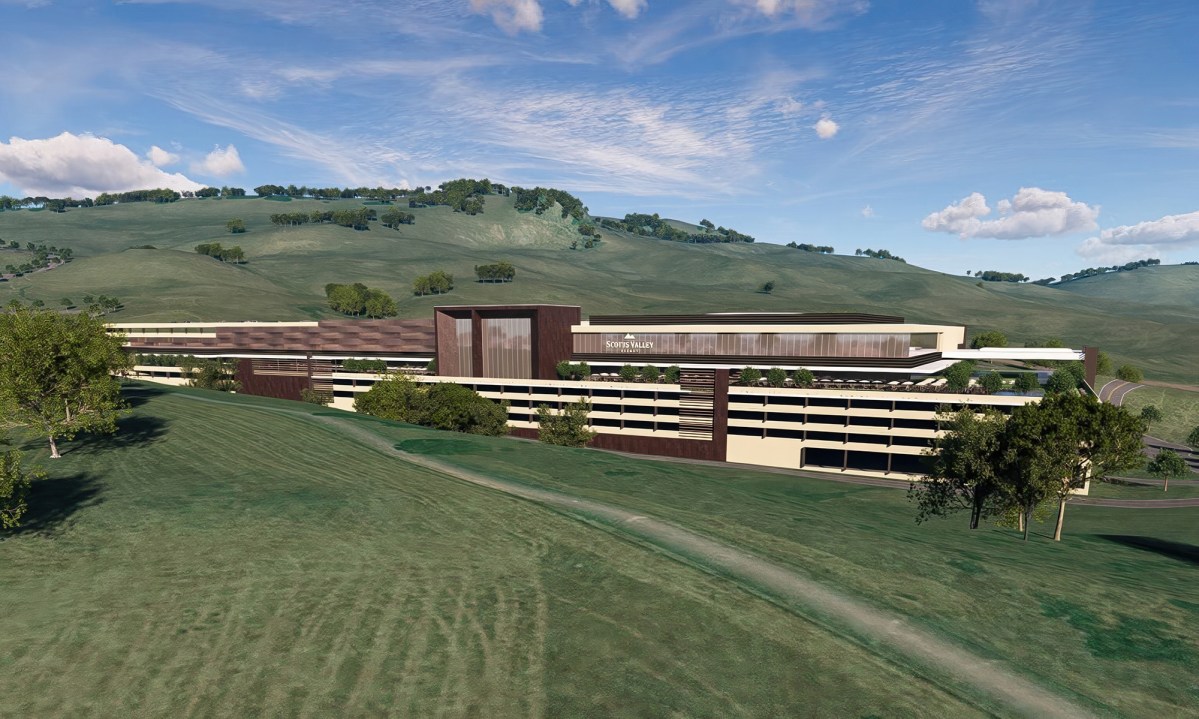
A slough borders the western fence line where state Highway 37 meets Interstate Highway 80 in Vallejo, with egrets working the marsh. On the dry side, 160 acres contain grass and survey stakes. Two modular trailers occupy the parcel: a gaming hall and tribal office, with a food truck spot available. The Scotts Valley Band of Pomo Indians describes this as a "preview" casino. By year's end, 100 Class II machines will be installed, followed by a planned $700 million resort.
On April 14, the Vallejo City Council voted 4-2 to approve a memorandum of understanding providing fire safety services, police, and utilities for the casino site.
On Friday, the Lytton Rancheria, a Sonoma County tribe based in Windsor, sued to stop the city agreement. The lawsuit, filed in Solano County Superior Court by Mayer Brown LLP and announced Monday, asks the court to void Vallejo's approval. Mayor Andrea Sorce was absent for the vote. Councilmembers Alex Matias and Tonia Lediju voted no. Vice Mayor Diosdado Matulac chaired the meeting.
Other tribes have already sued the federal government over whether the Vallejo parcel qualifies for gaming. Lytton is the first to challenge the city directly.
The complaint alleges Vallejo violated the California Environmental Quality Act; skipped required tribal consultation before approving projects that could disturb cultural sites; and provided city services to trust land outside city limits without approval from the Solano Local Agency Formation Commission.
"California law requires environmental review and meaningful tribal consultation before a city takes action like this. None of that has happened," stated Andy Mejia, Lytton Rancheria chair.
The city declared its action exempt from the California Environmental Quality Act under categorical exemptions ordinarily covering routine utility extensions and minor public services work.
The MOU states the action "merely provides public services to the site of a temporary use of land having negligible or no permanent effects on the environment."
"The city of Vallejo illegally rammed through this approval," Mejia declared. "California law requires environmental review and meaningful tribal consultation before a city takes action like this. None of that has happened."
Vallejo spokesperson Robert Briseño stated the city "does not have any public comment regarding potential or pending litigation." He provided the MOU and resolution but declined to answer additional questions.
The MOU specifies yearly payments: $362,000 funding police officer salaries, $27,302 for administrative assistance, and $12,698 in fees-in-lieu of property taxes. The tribe also pays a $100,000 activation fee in year one and at minimum $100,000 annually for local nonprofits, with the council controlling allocation. First-year costs total $602,000.
Additional commitments include installing automatic license plate readers, maintaining 24/7 private security, charging commercial water rates, and filling potholes on Columbus Parkway. Later amendments added 15% local hire requirements and White Slough cleanup contributions.
The initial casino is modest: approximately 5,400 square feet with up to 100 Class II gaming machines, plus a separate 2,700-square-foot modular trailer for tribal offices. Class II covers bingo and certain card games, requiring no state agreement. No full kitchen, bar, or entertainment is included; food comes from food trucks. Operating hours are 10 a.m. to 6 p.m. initially, with options extending to 10 p.m. The agreement lasts three years with 90-day exit provisions for either party.
On November 19, 2024, a different council voted 7-0 authorizing a cooperative agreement with the tribe under Mayor Robert McConnell. Matias and Lediju, April's dissenters, were not yet seated.
The November agreement committed parties to negotiate a binding "Intergovernmental Agreement" addressing water, sewer, traffic, public safety, and "social impacts" including "gambling addiction, personal bankruptcies, prostitution, drug addiction, and crime." The tribe waived sovereign immunity, ratified by its General Council.
A crucial recital stated the forthcoming Intergovernmental Agreement would provide "binding and enforceable mitigations of the potentially significant environmental effects of the Proposed Project." Vallejo's own document acknowledged the casino has potentially significant environmental effects requiring mitigation. The April 14 MOU claimed the covered services involve "negligible or no permanent effects on the environment" and "no environmentally sensitive areas."
The city employed different CEQA strategies. For November 2024's cooperative agreement, it ruled the agreement wasn't a "project" under environmental law — the broadest exemption available. For April 14's MOU, it switched: treating the action as a project but small enough for categorical exemptions covering routine utility and public-service work.
The promised Intergovernmental Agreement remains unsigned. The April 14 MOU is a smaller, three-year temporary services arrangement, not the binding mitigation framework the cooperative agreement established.
One MOU section automatically suspends the deal if the U.S. Department of the Interior — currently reconsidering the parcel's gaming eligibility — finds it ineligible under the federal Indian Gaming Regulatory Act.
Interior approved Scotts Valley's trust request on January 10, 2025, in former President Joe Biden's final days, ruling the parcel eligible for gaming under the "restored lands" exception for tribes whose ancestral lands were taken. New Interior leadership under President Donald Trump undid that approval in April 2025. In October, U.S. District Judge Trevor McFadden in Washington, D.C., overturned the reversal on due process grounds, allowing Interior to reconsider with proper procedure. That second review remains open.
Lytton, federally recognized and ancestrally tied to Alexander Valley, operates the San Pablo Lytton Casino in Contra Costa County, funding over half of San Pablo's budget. A Vallejo casino 25 miles north on I-80 would draw from the same Bay Area customer base. Lytton's news release cites a federal study projecting "substantial reductions in gaming revenue" at nearby tribal operations.
Mejia leads a second challenge closer to Windsor against the Koi Nation's proposed Shiloh Resort & Casino on town's eastern edge, using identical legal strategy: opposing reservation-shopping for high-revenue Bay Area sites while skipping required reviews.
Yocha Dehe Wintun Nation, which operates Cache Creek Casino in Yolo County and challenges the Vallejo parcel's federal gaming eligibility in U.S. District Court for the District of Columbia, opposed the MOU at the April 14 meeting. In a Monday tribal council statement, Yocha Dehe said Vallejo's vote will not "survive judicial review."
Patrick Bergin, Scotts Valley's counsel, responded: "This case appears to be about economic competition, not legal principle. Lytton has already benefited from the same federal trust land process it now seeks to challenge — effectively attempting to pull the ladder up behind it."
Bergin continued: "Lytton's own local government agreements governing its trust land expressly recognize exemption from CEQA. This lawsuit disregards well-established law and is designed to delay a lawful agreement with the city of Vallejo. We are confident in the city's process."
Lytton's complaint asks the state court to void Vallejo's MOU approval, prohibit service provision under it, and require full CEQA compliance before retry. Mejia indicated the tribe would prefer settling without litigation.